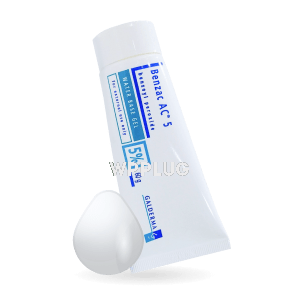
| Product dosage: 20g | |||
|---|---|---|---|
| Package (num) | Per tube | Price | Buy |
| 2 | $33.10 | $66.19 (0%) | 🛒 Add to cart |
| 3 | $29.08 | $99.29 $87.25 (12%) | 🛒 Add to cart |
| 4 | $26.08 | $132.38 $104.30 (21%) | 🛒 Add to cart |
| 5 | $23.07 | $165.48 $115.33 (30%) | 🛒 Add to cart |
| 6 | $20.06 | $198.58 $120.35 (39%) | 🛒 Add to cart |
| 7 | $18.63 | $231.67 $130.38 (44%) | 🛒 Add to cart |
| 8 | $17.68 | $264.77 $141.41 (47%) | 🛒 Add to cart |
| 9 | $16.60 | $297.86 $149.43 (50%) | 🛒 Add to cart |
| 10 | $15.24
Best per tube | $330.96 $152.44 (54%) | 🛒 Add to cart |
Synonyms | |||
Similar products
More info:
benzoyl
Benzoyl peroxide represents one of those foundational dermatologic agents that somehow manages to remain both profoundly effective and consistently misunderstood. When I first started in dermatology residency, we had this attending physician, Dr. Evans, who’d been practicing since the 1970s. He used to keep a bottle of 10% benzoyl peroxide wash in his desk drawer—not for patients, but for cleaning ink stains off his lab coat. “Works better than anything else,” he’d say with this wry smile.
benzac
Benzoyl peroxide 5% gel - we’ve been using this topical antimicrobial for acne vulgaris since the 1950s, and honestly, it remains one of the most reliable first-line treatments in our dermatology practice. The formulation we’re discussing today contains 5% benzoyl peroxide in an aqueous gel base, which provides both antimicrobial activity against Cutibacterium acnes and mild comedolytic effects. What’s interesting is how this simple compound continues to outperform many newer, more expensive alternatives when used correctly.
Clindamycin: Potent Antibiotic for Anaerobic and Resistant Infections - Evidence-Based Review
Clindamycin is a lincosamide antibiotic derived from lincomycin, used clinically since the 1960s primarily for anaerobic and gram-positive bacterial infections. It works by binding to the 50S ribosomal subunit, inhibiting bacterial protein synthesis. Available in oral capsules, topical solutions/gels, and injectable forms, it remains a cornerstone treatment for serious infections where penicillin allergies exist or resistance patterns demand broader coverage. 1. Introduction: What is Clindamycin? Its Role in Modern Medicine Clindamycin belongs to the lincosamide class of antibiotics, initially isolated from Streptomyces lincolnensis.
Differin: Effective Acne Treatment Through Targeted Retinoid Action - Evidence-Based Review
Adapalene, marketed under the brand name Differin, represents a significant advancement in topical retinoid therapy, specifically formulated as a 0.1% gel, cream, or lotion for the treatment of acne vulgaris. Originally available only by prescription, its FDA approval for over-the-counter use in 2016 democratized access to what was previously considered a pharmaceutical-grade treatment, bridging the gap between cosmetic products and prescription retinoids. As a third-generation naphthoic acid derivative with retinoid activity, Differin selectively targets retinoic acid receptors (RARs), particularly RAR-β and RAR-γ, without activating retinoid X receptors (RXRs), which contributes to its favorable efficacy and tolerability profile compared to earlier retinoids like tretinoin.
eukroma cream
Hydroquinone 4% with kojic acid and retinol - that’s the core formulation we’re discussing today, though most patients and even some younger dermatologists just know it as eukroma cream. Developed initially for stubborn melasma cases that weren’t responding to conventional therapies, this combination product has become something of a workhorse in my clinic for various forms of hyperpigmentation. The formulation represents what I’d call second-generation thinking in depigmentation agents - moving beyond single-mechanism approaches to target melanin production through multiple pathways simultaneously.
Neem: Comprehensive Support for Skin Health and Metabolic Function - Evidence-Based Review
Neem (Azadirachta indica) is one of those botanical substances that keeps showing up in my practice - patients bringing in leaves from their backyard trees, traditional practitioners recommending various preparations, and now standardized extracts appearing in supplement aisles. What started as occasional inquiries has become a steady stream of patients asking about its applications, particularly for dermatological conditions and metabolic support. The challenge has always been separating traditional use from evidence-based applications.
Ret Gel: Advanced Acne and Photoaging Treatment - Evidence-Based Review
A topical retinoid gel containing tretinoin 0.025% in a hydrating base with niacinamide and ceramides. The formulation represents a significant advancement in retinoid delivery, specifically engineered to maximize cutaneous penetration while minimizing the characteristic irritation that often limits patient adherence. We’ve moved beyond the simple alcohol-based solutions of the 1980s to a sophisticated system that actually protects barrier function during the retinization process. 1. Introduction: What is Ret Gel? Its Role in Modern Dermatology Ret Gel represents the current gold standard in topical retinoid therapy, bridging the gap between efficacy and tolerability that has long challenged dermatologists.
retin a 0025
Let me walk you through what we’ve learned about Retin-A 0.025% over the years - this isn’t the glossy brochure version, but the real clinical experience that comes from seeing hundreds of patients navigate this treatment. Retin-A 0.025% contains tretinoin, the acid form of vitamin A, formulated at 0.025% concentration in various cream, gel, or microsphere delivery systems. What’s fascinating is how this seemingly simple concentration has become our workhorse in dermatology - strong enough to deliver results but gentle enough for long-term maintenance and sensitive skin types.
retin a 005
Let me walk you through what we’ve learned about Retin-A 0.05% over the years - this isn’t the polished pharmaceutical brochure version, but the real clinical experience that comes from thousands of patient visits and some genuine head-scratching moments in our practice. When we first started working with tretinoin 0.05% back in the late 90s, the standard teaching was simple: it’s for acne. Full stop. But what we’ve observed in clinic tells a much richer story.