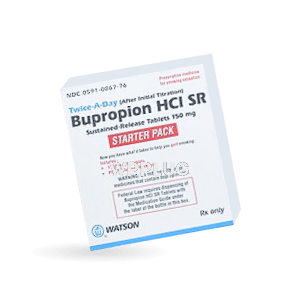
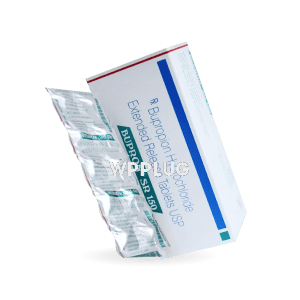
| Product dosage: 150mg | |||
|---|---|---|---|
| Package (num) | Per pill | Price | Buy |
| 30 | $1.37 | $41.12 (0%) | 🛒 Add to cart |
| 60 | $1.07 | $82.24 $64.19 (22%) | 🛒 Add to cart |
| 90 | $0.97 | $123.36 $87.26 (29%) | 🛒 Add to cart |
| 120 | $0.93 | $164.49 $111.33 (32%) | 🛒 Add to cart |
| 180 | $0.87 | $246.73 $157.47 (36%) | 🛒 Add to cart |
| 270 | $0.84 | $370.09 $227.67 (38%) | 🛒 Add to cart |
| 360 | $0.83
Best per pill | $493.46 $297.88 (40%) | 🛒 Add to cart |
Similar products
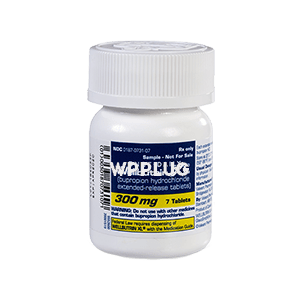
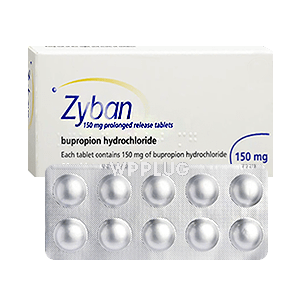
More info:
Bupropion: Effective Depression and Smoking Cessation Treatment - Evidence-Based Review
Bupropion is an atypical antidepressant belonging to the norepinephrine-dopamine reuptake inhibitor (NDRI) class, distinct from the more common SSRIs. Initially approved for depression in 1985, it’s become a cornerstone treatment for major depressive disorder and smoking cessation, with off-label uses expanding significantly over the past decade. What makes bupropion particularly valuable in clinical practice is its unique neurochemical profile—it doesn’t affect serotonin, which means we’re not dealing with the sexual side effects or weight gain that often complicate SSRI treatment.
bupron sr
Bupropion SR, or sustained-release bupropion, represents one of those rare psychopharmacological innovations that actually changed how we approach depression treatment in clinical practice. Unlike the flood of me-too SSRIs that dominated the 90s, bupropion brought something genuinely different to the table - a novel mechanism that didn’t involve serotonin, which was revolutionary at the time. I remember when we first started using it at our clinic, we had this mixture of skepticism and excitement because here was something that finally addressed depression without the sexual side effects that plagued so many of our patients on traditional antidepressants.
champix
Champix, known generically as varenicline, represents one of the most significant pharmacological advances in smoking cessation therapy over the past two decades. It’s not a dietary supplement but a prescription medication specifically designed to target nicotine addiction at its neurological source. Developed after years of receptor research, this partial nicotinic agonist fundamentally changed how we approach tobacco dependence in clinical practice. The transition from research concept to clinical tool wasn’t straightforward though.
contrave
Contrave represents one of the more interesting pharmacological approaches to weight management we’ve seen in recent years—it’s not another stimulant-based appetite suppressant or surgical intervention, but rather a combination therapy targeting the neurological pathways involved in craving and satiety. When I first reviewed the clinical trial data back in 2014, I was skeptical about combining bupropion and naltrexone—two established medications with completely different primary indications—for chronic weight management. But the neurobiological rationale actually holds up surprisingly well in practice.
cymbalta
Duloxetine hydrochloride, marketed under the brand name Cymbalta, represents a significant class of medication known as a serotonin and norepinephrine reuptake inhibitor (SNRI). It’s not a dietary supplement or medical device but a prescription pharmaceutical primarily indicated for major depressive disorder (MDD), generalized anxiety disorder (GAD), and several chronic pain conditions like diabetic peripheral neuropathic pain and fibromyalgia. Its development marked a shift from older antidepressants by targeting two key neurotransmitters simultaneously, which offered a different efficacy and side effect profile that we’ve found particularly useful in patients with comorbid pain and mood symptoms.
fertomid
Fertomid represents one of those fascinating cases where a well-established pharmaceutical agent gets repurposed through deeper understanding of its mechanisms. We’re talking about clomiphene citrate here, specifically the enclomiphene isomer that’s been separated out to create a more targeted therapeutic profile. What started as a standard ovulation induction agent has evolved into something much more nuanced in reproductive medicine. The transformation happened when researchers realized zuclomiphene, the other isomer in traditional clomiphene, was causing many of the undesirable estrogenic effects while enclomiphene provided the pure anti-estrogenic activity we actually wanted.
Fluoxetine: Evidence-Based Treatment for Depression and Related Conditions - Comprehensive Review
Fluoxetine, a selective serotonin reuptake inhibitor (SSRI), represents one of the most extensively studied and widely prescribed antidepressants in modern psychopharmacology. Initially approved by the FDA in 1987, this molecule fundamentally changed depression treatment paradigms and expanded into numerous psychiatric and even some off-label uses. What’s fascinating isn’t just its mechanism—which we’ll explore in depth—but how its clinical application has evolved through decades of real-world experience across millions of patients worldwide.
forzest
Forzest represents a significant advancement in non-invasive neuromodulation technology, specifically engineered for managing chronic neuropathic pain conditions that have proven refractory to conventional pharmacological interventions. The device utilizes precisely calibrated transcranial magnetic stimulation (TMS) pulses to modulate aberrant neural circuitry in the dorsolateral prefrontal cortex and anterior cingulate cortex—key regions implicated in the affective and sensory dimensions of persistent pain. Unlike systemic medications that often carry substantial side effect burdens, Forzest offers targeted intervention with a favorable safety profile, making it particularly valuable for patients with complex comorbidities or polypharmacy concerns.
Lexapro: Targeted Serotonin Reuptake Inhibition for Depression and Anxiety - Evidence-Based Review
Before we dive into the formal monograph, let me give you some context about Lexapro that you won’t find in the standard prescribing information. I’ve been prescribing this SSRI for nearly two decades now, and the journey with this medication has been… well, let’s just say more nuanced than the clinical trials suggest. When Lexapro first hit the market back in 2002, many of us were skeptical. “Just another SSRI” we thought - but there was something different about this purified S-enantiomer of citalopram.