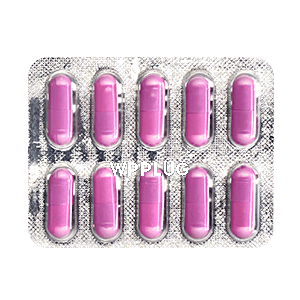
| Product dosage: 150mg | |||
|---|---|---|---|
| Package (num) | Per pill | Price | Buy |
| 30 | $1.44 | $43.13 (0%) | 🛒 Add to cart |
| 60 | $1.22 | $86.25 $73.21 (15%) | 🛒 Add to cart |
| 90 | $1.17 | $129.38 $105.31 (19%) | 🛒 Add to cart |
| 120 | $1.14 | $172.50 $136.40 (21%) | 🛒 Add to cart |
| 180 | $1.09 | $258.75 $196.57 (24%) | 🛒 Add to cart |
| 270 | $1.07
Best per pill | $388.13 $289.85 (25%) | 🛒 Add to cart |
| Product dosage: 300mg | |||
|---|---|---|---|
| Package (num) | Per pill | Price | Buy |
| 30 | $1.60 | $48.14 (0%) | 🛒 Add to cart |
| 60 | $1.39 | $96.28 $83.24 (14%) | 🛒 Add to cart |
| 90 | $1.31 | $144.42 $118.35 (18%) | 🛒 Add to cart |
| 120 | $1.27 | $192.56 $152.44 (21%) | 🛒 Add to cart |
| 180 | $1.24 | $288.84 $223.65 (23%) | 🛒 Add to cart |
| 270 | $1.21
Best per pill | $433.26 $326.95 (25%) | 🛒 Add to cart |
Synonyms | |||
More info:
Clindamycin: Potent Antibiotic for Anaerobic and Resistant Infections - Evidence-Based Review
Clindamycin is a lincosamide antibiotic derived from lincomycin, used clinically since the 1960s primarily for anaerobic and gram-positive bacterial infections. It works by binding to the 50S ribosomal subunit, inhibiting bacterial protein synthesis. Available in oral capsules, topical solutions/gels, and injectable forms, it remains a cornerstone treatment for serious infections where penicillin allergies exist or resistance patterns demand broader coverage. 1. Introduction: What is Clindamycin? Its Role in Modern Medicine Clindamycin belongs to the lincosamide class of antibiotics, initially isolated from Streptomyces lincolnensis.
bactrim
Bactrim, the brand name for the fixed-dose combination antibiotic containing sulfamethoxazole and trimethoprim, represents one of those workhorse medications that every clinician ends up having a complicated relationship with. It’s sitting there in your formulary, not particularly glamorous, but when you need it for the right patient, nothing else quite fits the bill. I remember my first month on infectious disease consult service, the attending looked at my proposed regimen for a PJP pneumonia patient and just said “You’re forgetting the classic double-strength Bactrim protocol - this is why we still keep this drug around.
benzac
Benzoyl peroxide 5% gel - we’ve been using this topical antimicrobial for acne vulgaris since the 1950s, and honestly, it remains one of the most reliable first-line treatments in our dermatology practice. The formulation we’re discussing today contains 5% benzoyl peroxide in an aqueous gel base, which provides both antimicrobial activity against Cutibacterium acnes and mild comedolytic effects. What’s interesting is how this simple compound continues to outperform many newer, more expensive alternatives when used correctly.
benzoyl
Benzoyl peroxide represents one of those foundational dermatologic agents that somehow manages to remain both profoundly effective and consistently misunderstood. When I first started in dermatology residency, we had this attending physician, Dr. Evans, who’d been practicing since the 1970s. He used to keep a bottle of 10% benzoyl peroxide wash in his desk drawer—not for patients, but for cleaning ink stains off his lab coat. “Works better than anything else,” he’d say with this wry smile.
Chloramphenicol: Potent Antibacterial Protection for Serious Infections - Evidence-Based Review
Before diving into the formal structure, let me give you the real clinical perspective on chloramphenicol that you won’t find in package inserts. We still keep it in our hospital’s emergency stock despite newer antibiotics, and here’s why - last month I had a 68-year-old diabetic farmer, Mr. Henderson, with a corneal ulcer from agricultural trauma. Culture showed Pseudomonas resistant to everything except… you guessed it. The ophthalmology resident was nervous about using it, but we had no choice.
Cleocin: Potent Antibiotic for Anaerobic and Serious Bacterial Infections - Evidence-Based Review
Clindamycin, marketed under the brand name Cleocin among others, is a lincomycin antibiotic used primarily for treating anaerobic bacterial infections, certain protozoal diseases, and serious infections caused by susceptible strains of streptococci, staphylococci, and pneumococci. It’s a critical agent in the medical arsenal, particularly effective against bacteria that reside in low-oxygen environments like the gut, deep tissue abscesses, and the female reproductive tract. Available in oral capsules, topical solutions, gels, lotions, vaginal creams and suppositories, and injectable forms, its versatility in administration routes allows clinicians to target infections systemically or locally based on the pathology.
emulgel
An emulgel represents a sophisticated hybrid topical delivery system that combines the properties of both emulsions and gels. This advanced formulation creates a biphasic system where an oil phase is uniformly dispersed within a continuous aqueous gel phase, stabilized by appropriate emulsifying agents. The resulting product exhibits the moisturizing and penetrating properties of an emulsion while maintaining the stability, spreadability, and cooling sensation characteristic of gels. In clinical practice, we’ve found emulgels particularly valuable for delivering both hydrophilic and lipophilic active ingredients simultaneously, which explains their growing prominence in dermatological and transdermal applications.
flagyl er
Metronidazole Extended-Release, commonly known as Flagyl ER, represents a significant advancement in the treatment of anaerobic and protozoal infections. This 750mg extended-release formulation was specifically engineered to address the pharmacokinetic limitations of immediate-release metronidazole while maintaining the same potent antimicrobial activity that has made this nitroimidazole derivative a cornerstone of infectious disease therapy for decades. The development journey wasn’t straightforward - our team initially struggled with achieving consistent release profiles across different pH environments, particularly given metronidazole’s variable absorption characteristics.
Keflex: Effective Bacterial Infection Treatment - Evidence-Based Review
Cephalexin, marketed under the brand name Keflex among others, is a first-generation cephalosporin antibiotic belonging to the beta-lactam class. It’s one of those foundational agents you’ll find in virtually every hospital formulary and many community pharmacies worldwide. Structurally, it shares characteristics with penicillins but offers a broader spectrum of activity, particularly against gram-positive organisms. What’s fascinating is how this 50-year-old antibiotic maintains clinical relevance despite the proliferation of resistant strains—we’re still reaching for it multiple times daily in both inpatient and outpatient settings.